News
-
![]()
In 2026, wall art is no longer just decoration — it has become one of the most important tools for shaping the mood, identity, and architectural character of a home. Among the fastest-growing categories in Google searches and premium interior projects is geometric wood wall art, especially designs that combine circular forms, rectangles, layered textures, and natural wood finishes. The artwork above perfectly represents this trend, blending modern geometry with handcrafted textures to create a statement piece that feels both artistic and architectural. This FAQ-style guide answers the most common questions buyers ask before purchasing large sculptural wall art.
-
![]()
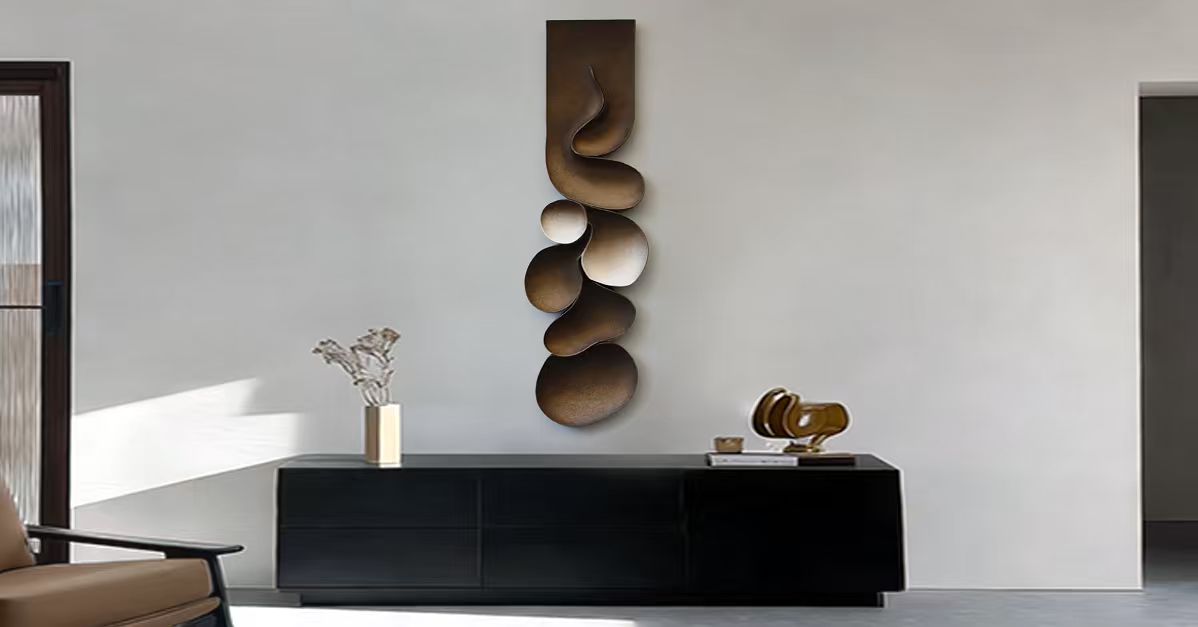
For years, oversized horizontal artwork dominated living room design. In 2026, interior designers are embracing a different direction — vertical sculptural wall art that adds movement, height, and architectural rhythm to modern interiors. The artwork above perfectly represents this emerging trend. Featuring stacked organic forms, warm walnut tones, and a floating sculptural composition, it transforms an empty wall into a sophisticated design statement without overwhelming the room. Rather than functioning as a traditional painting, this style acts as an extension of the architecture itself — blurring the line between furniture, sculpture, and art.
-
![]()
Luxury interior design in 2026 is no longer about filling walls—it’s about creating unforgettable visual experiences. One of the fastest-growing trends is sculptural metal wall art, where reflective finishes, organic forms, and three-dimensional textures transform a simple wall into the centerpiece of an entire room. The artwork above showcases this movement perfectly. Its flowing concentric texture, mirror-like metallic surface, and freeform silhouette create a dynamic sculpture that changes throughout the day as light moves across its surface. Rather than acting as a traditional painting, it functions as architectural décor, adding depth, movement, and luxury to modern interiors. At RochesArt, we believe statement wall art should not only decorate a space but also become part of its architecture.